Medical Assistant Certification in Tulsa: What It Is, Why It Matters, and How to Get It

Medical assistant certification is one of the smartest investments you can make in your career — and one of the most commonly misunderstood. It’s not legally required in most states. You can technically get hired without it. But the candidates who hold a certification consistently get hired faster, earn more, and have stronger career trajectories than those who don’t.
Here’s what certification actually means, the main credentials available, and how to earn yours in Tulsa.
What medical assistant certification means
Certification is a professional credential that demonstrates you’ve been trained and tested in the core competencies of medical assisting. It’s issued by a national organization after you pass a standardized exam.
Think of it as a signal to employers: this person has verified knowledge and skills, not just a participation certificate from an unknown program.
The three main certifications
CCMA — Certified Clinical Medical Assistant
- Issued by: National Healthcare Association (NHA)
- What it covers: Clinical skills (vitals, phlebotomy, injections, EKGs), patient care, infection control, and administrative procedures
- Eligibility: Completion of an approved medical assistant training program (or equivalent experience)
- Exam format: Computer-based, multiple-choice
- Why it’s popular: Widely recognized, accessible eligibility requirements, and accepted by employers nationwide
RMA — Registered Medical Assistant
- Issued by: American Medical Technologists (AMT)
- What it covers: Both clinical and administrative medical assisting
- Eligibility: Accredited program completion or qualifying work experience
- Exam format: Computer-based
CMA — Certified Medical Assistant
- Issued by: American Association of Medical Assistants (AAMA)
- What it covers: Broad clinical and administrative competencies
- Eligibility: Graduation from a CAAHEP- or ABHES-accredited program
- Note: The CMA has stricter program accreditation requirements, making the CCMA or RMA more accessible for many students
All three are legitimate, nationally recognized credentials. The CCMA is often the most straightforward path for students graduating from focused training programs.
Why certification matters for your career
1. Employers prefer it
Hiring managers see certification as proof that you can do the job. It reduces their risk and gives them confidence that you won’t need extensive hand-holding during onboarding.
2. Higher starting pay
Some employers offer a pay premium for certified medical assistants — sometimes $1–$3 more per hour, which adds up to $2,000–$6,000+ more per year.
3. Faster hiring
Certified candidates often move through the interview and onboarding process more quickly. Employers know what the credential means, so there’s less need to verify skills through extended interviews or trial periods.
4. Career mobility
The CCMA and RMA are recognized nationwide. If you move to a different state or city, your certification goes with you — no need to re-train or re-credential.
5. Foundation for advancement
Certification demonstrates commitment and competence, which positions you for lead roles, specialty positions, and management opportunities down the line.
How to earn your certification
The process is straightforward:
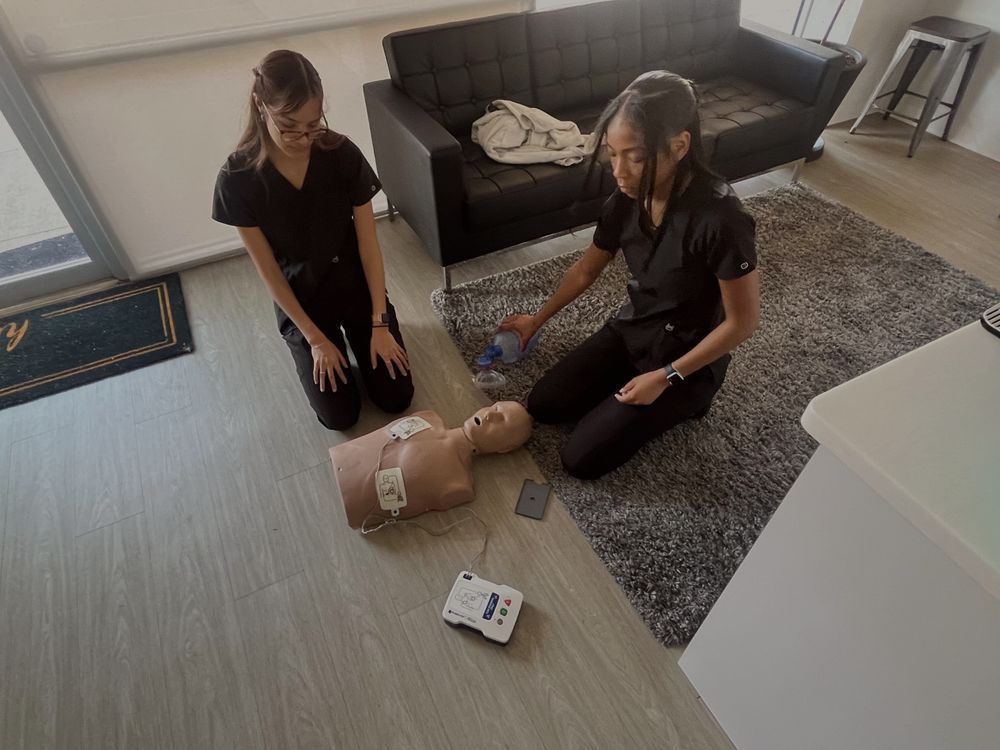
- Complete a qualifying training program — focused programs that include clinical and administrative skills, with hands-on practice
- Prepare for the exam — the best programs integrate certification prep throughout the curriculum, not as a last-minute add-on
- Register for the exam — schedule through the certifying body (NHA for CCMA, AMT for RMA, AAMA for CMA)
- Pass the exam — computer-based, multiple-choice format; results are typically available quickly
- Maintain your credential — some certifications require continuing education to stay current
What to look for in a certification-prep program
Not all training programs prepare you equally for certification. Before enrolling, ask:
- Is certification exam prep integrated into the curriculum?
- Which certification does the program prepare you for (CCMA, RMA, CMA)?
- Is the exam fee included in tuition, or is it an additional cost?
- Does the program include hands-on clinical practice?
- What is the program’s exam pass rate?
See what our program offers: Program details.
Get certified through Tulsa Medical Assistant School
- Explore the program: Program details
- Review tuition and payment plans: Tuition
- Talk to our team: Contact
- Apply: How to apply
You're only a few months from the medical assistant career you deserve.